Sub-Total: $0.00

Serving Schools, Loving Communities: How One Church Discovered That Ministry to Schools Was About More Than Schools
By Richard Sandberg, pastor of Corinth Baptist Church in New Kent, VA
For many churches, local schools can feel like closed doors.
Concerns about legal boundaries, cultural tensions, public perception, and uncertainty about what is allowed often leave churches unsure how to engage schools in meaningful, faithful ways. Yet schools remain one of the few places where nearly every part of a community intersects. Families gather there. Students spend much of their lives there. Teachers carry enormous emotional and relational burdens there. Administrators spend their days navigating challenges most people never see.
In many communities, schools function as relational hubs for the entire county.
When I first moved to New Kent, Virginia, I quickly realized that if our church genuinely wanted to serve the community, local schools could not simply become another ministry option on a list of programs. They needed to become part of how we understood our mission.
What followed was not a carefully engineered outreach strategy or a master plan developed in a conference room. It began with a simple question.
“What needs do you have, and how can we help?” Looking back, that question changed everything.
An Unexpected Beginning
One of the first things I did after arriving in New Kent was schedule meetings with the superintendent and principals of several local schools. I introduced myself simply as a pastor who believed our church should actively serve the community around us. I explained that we wanted to support schools, encourage educators, and help students however we could.
Then I asked that simple question.
What surprised me was how different the answers were. The elementary school principal offered opportunities for volunteers to serve as lunch monitors. The high school principal talked about supporting extracurricular activities and invited us to provide a meal for the marching band and serve hot chocolate during a student event. The middle school principal pointed us toward the Watch D.O.G.S. program and invited us to participate in Teacher Appreciation Week.
None of those ideas came from us. We did not walk into those meetings with a fully developed ministry strategy. We did not arrive with demands, expectations, or a vision for what schools should allow churches to do.
We simply listened.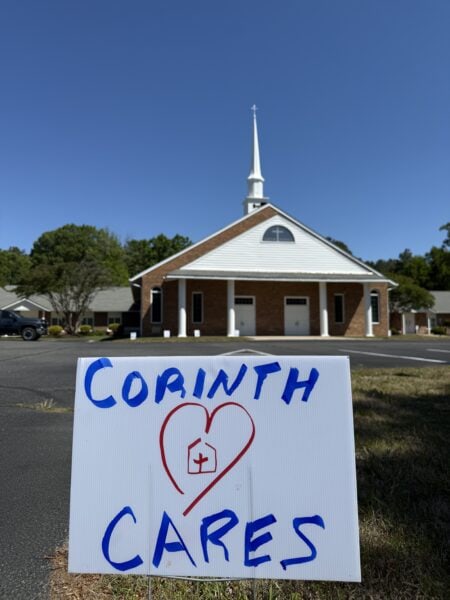
That simple decision became one of the most important lessons we would learn.
Too often churches approach schools asking, “How can we get involved?” While well-intentioned, we discovered there is often a better question: “What would genuinely help?”
Rather than creating needs to justify our presence, we responded to needs school leaders had already identified. Instead of forcing doors open, we simply stepped through the doors that were already open.
We were not creating needs to justify our presence. We were responding to needs they had already identified.
Consistency Is Better Than Big
Today, our church is probably best known in the community for a large Teacher Appreciation outreach each spring. It has become one of the most visible ministries we host.
But if I am honest, most of the impact did not come from that event. It came from a hundred smaller acts of service. We painted faces at a homecoming carnival. We served coffee to teachers before school. We handed out hot chocolate during community events. We made tacos for marching band students on senior night. We collected neck ties for “Tie Tuesday” at the middle school. Volunteers served as lunch monitors. Church members wrote encouragement notes for educators.
None of those things were particularly dramatic. Most would never make a newspaper headline. Individually, they seemed small. But over time those small acts communicated something powerful.
We care. And we’re here to stay.
In some ways, large events are easier than consistency. Churches can rally volunteers for a single event, celebrate afterward, post a few pictures online, and move on to the next thing.
Long-term ministry requires something different. It requires presence. Teachers need more than events. They need partners. Administrators need more than programs. They need people they can trust. Students need more than occasional appearances. They need to see familiar faces.
Trust is rarely built through one impressive event. It is usually built when teachers, students, and administrators encounter the same people serving faithfully over and over again. Consistency creates familiarity. Familiarity builds relationships. Relationships develop trust. And trust opens doors that programs alone never can.
Ministry is rarely built on one dramatic moment. More often, it is built through repeated acts of faithfulness that slowly establish trust and relationships over time.
More Than Coffee and Hot Chocolate
As the ministry grew, we learned another important lesson: Actions matter. Words matter too.
Our goal was never simply to give students hot chocolate or provide teachers with meals. Those things served a purpose, but they were not the ultimate goal. The goal was relationship. The coffee mattered. The meals mattered. The gift cards mattered. But each one was intended to communicate something deeper. When we served coffee to teachers, we often included handwritten “morning pick-me-up” notes. When volunteers participated in school events, they wore shirts that said, “Corinth Cares.” When we hosted appreciation events, we frequently included notes, books, prayers, or messages of encouragement; not because we wanted recognition. but because we wanted people to understand the heart behind the service.
Many people talk about letting actions speak louder than words, and there is certainly truth in that. In many cases, people will believe what we do long before they believe what we say. But we discovered that actions and words work best together. Even Jesus—the most loving and perfect person who ever lived—used both words and actions. He healed people, fed people, and served people, but He also clearly communicated truth, compassion, invitation, and purpose through His words.
Again and again, teachers told us the same thing. The handwritten note meant more than the gift card. The encouragement card mattered more than the meal. The prayer mattered more than the coffee. At first, that surprised me. Then I realized what it revealed – many educators are not simply exhausted physically. They are discouraged emotionally. They feel unseen, unappreciated, forgotten. In a world filled with criticism and pressure, encouragement itself became ministry.
Appreciation Opens Doors
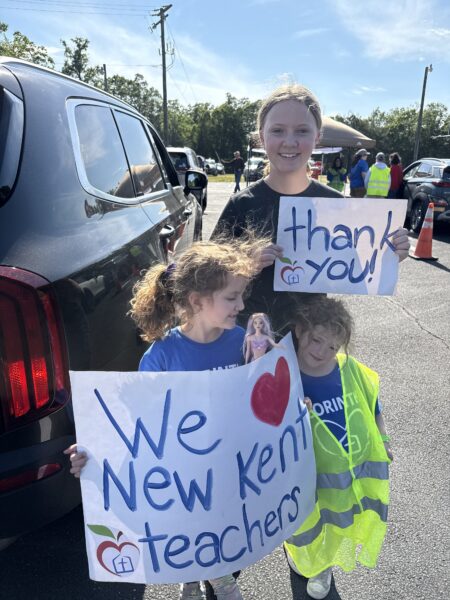 Of all the school ministries our church has participated in, none has had a greater impact than Teacher Appreciation. Several years ago, we accepted an invitation to help provide meals during Teacher Appreciation Week. The assignment was simple. We wanted to give teachers one evening off from cooking by providing a meal for their families. What started as a small effort eventually became one of the most impactful community ministries our church does.
Teachers place orders in advance so we can be prepared with enough food. On the evening of the event, they drive through the church parking lot located directly across from the schools. Volunteers stand outside with signs, wave, cheer, and welcome them as they arrive. Inside, teams prepare meals of barbecue, macaroni and cheese, baked beans, buns, and homemade desserts while runners coordinate deliveries.
But perhaps the most meaningful moment happens while people wait. A volunteer simply asks, “Is there anything we can pray for you or your family about? Would it be OK if I prayed for you right now?”
There is never pressure.
No obligation.
No expectation.
Just an offer.
Some decline.
Many do not.
Those brief moments have often become the most significant part of the entire event.
In 2026, we distributed 576 meals to educators, firefighters, sheriff’s deputies, and other community servants. Yet the most important thing that happened was not the number of meals. After the second year, I began noticing a change. People were more open.
Teachers who previously had little connection with me or with our church started initiating conversations. Administrators began contacting us when needs arose. Relationships deepened and spiritual conversations happened naturally and relationally with people who likely would never have walked into a church building on their own. The more we demonstrated genuine care, the more schools began viewing us not as an organization hosting events but as trusted community partners. Appreciation opened doors.
Walking a Careful Line
One of the misconceptions about school ministry is that churches must choose between remaining completely silent about their faith or becoming aggressive and confrontational. Our experience suggested a healthier path. We worked hard to respect school policies and boundaries while remaining open about who we are and why we serve.
One day I was invited into a classroom to discuss the study of Hebrew and Greek. Students asked questions about language, and I shared insights from studying biblical languages. On another occasion, an English teacher learned I had published a book of poetry and invited me to speak with her students. That opportunity eventually led to reading a Christmas poem centered on the birth of Christ. At another event, a principal invited me to speak during “Tie Tuesday” and challenge seventh-grade boys to think about character, responsibility, and maturity. None of those opportunities were forced. They emerged through relationships.
We also remained clear internally about why we were there. We were there because we love Jesus, because we love people, and because we believe the Gospel changes lives. We simply chose to approach those opportunities relationally rather than forcefully.
Trust created space for meaningful conversations.
The more schools trusted us not to force an agenda, the more opportunities seemed to arise naturally.”
More Than Schools
Perhaps the greatest surprise came several years later. When we first began serving schools, I assumed the ministry would primarily impact teachers, administrators, students, and parents. That certainly happened; but something larger happened as well. People throughout the community began associating our church with compassion, encouragement, reliability, and care. Even individuals who had never attended an event heard about what was happening through teachers, families, and community conversations. Over time, “Corinth Cares” stopped being a slogan. It became our reputation.
Showing care for schools communicated care for the community itself. People formed impressions of our church long before they ever attended a worship service. Community leaders viewed us differently. Families viewed us differently. Neighbors viewed us differently.
Looking back, one of the greatest lessons we learned is that ministry in schools was never only about schools. It was about loving an entire community through one of the places where that community gathers most consistently.
Jesus did not wait for people to come to Him before entering their world. He walked among people. He listened to people. He served people. He loved people where they already were. In many ways, ministry in schools simply became one practical way for our church to do the same. We stopped waiting for the community to walk through our doors first and instead chose to faithfully walk into the places where the community was already gathering.
Over time, God used those small acts of presence, encouragement, and consistency to open doors we never could have forced open ourselves.
If you want to learn more about how to start a similar ministry in your own community, check out our “Getting Started: Ministry to Schools” Resource below