Sub-Total: $0.00

-by Craig Waddell
Church planting belongs inherently with discipleship and fulfilling the Great Commission. A pathway for staying relevant and reaching new people, it is also one of the ways we discover and cultivate our gifts and leadership within the church.
In the Great Commission (Matthew 28), the resurrected Messiah Jesus instructs his followers, “As you are going, make disciples of all nations …” Part of our purpose in this world is to grow in Christlikeness and to plant communities that demonstrate God’s presence. Being a disciple—and a discipler—includes participation in the church—the community that exists to experience and model the new creation God began in the Messiah. Church planting is an intentional way to live this calling.
Many companies maintain research and development departments that monitor cultural trends and needs, so they can communicate effectively and provide what people are actually seeking. In a similar way, church planting can serve as the research and development arm of the church. Church planters seek to communicate the gospel in relevant ways and create new expressions of faith in community for people who may not relate to traditional forms of church. While church planting is justified as a legitimate endeavor of the church, it also becomes an indispensable learning laboratory that helps the established church remain refreshed and attentive to its context.
Impact Missions is committed to church planting with mission partners at home and abroad. Together with Fresh Expressions, for example, the Food to Faith Initiative is helping congregations move beyond food pantries toward Dinner Churches—expressions of Christ-centered fellowship around the community dinner table. We also work with indigenous church planters around the world, with particular focus on Western Africa, Eastern Europe, Central Asia, and the Middle East.
In Africa, we have partnered with the Global Missions Resource Center and the National Baptist Conventions of 10 countries—Benin, Burkina Faso, Ghana, Guinea, Ivory Coast, Liberia, Nigeria, Sierra Leone, and Togo—to provide resources, financial support, and training with the goal of planting 2,000 churches by 2030. Each country is eligible to receive an interest-free loan used to establish a business that generates income to sustain church planting for at least five years. As loans are repaid, funds are reinvested so the movement can continue well into the future. Since the program began in 2023, five conventions have reported planting 221 new churches. We anticipate additional business models coming online over the next 18 months, allowing even more churches to be planted and indigenous planters to be supported.
In 2002, BGAV collaborated with the European Baptist Federation (EBF) to establish Mission Partnerships, which facilitate church sponsors for indigenous church planters in Eastern Europe, the Middle East, and Central Asia. Through this partnership, BGAV has been involved in more than 40 church plants and currently supports planters in Lebanon, Jordan, Poland, Latvia, and Moldova. 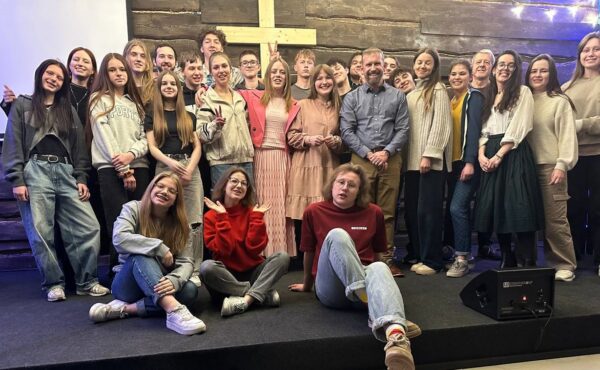
One of the most encouraging developments has been church-to-church partnerships between BGAV congregations and indigenous church planters. Eastville Baptist on the Eastern Shore has supported a church planter in Poland for three years financially, through regular email contact, Zoom conversations, and shared prayer. Beth Car Baptist in Halifax recently began partnering with a church planter in Lebanon—an encouragement for the Lebanese church and a source of renewed energy for both congregations. King’s Grant Baptist in Virginia Beach is also working with EBF partners to build a similar relationship. For several years, the Goshen Baptist Association has supported three indigenous church planters in Armenia, a work that grew from the EBF partnership in Central Asia. Volunteers are currently preparing for another mission experience with their Armenian partners.
In addition to the financial support we provide together as a BGAV family, focus:churchplanting offers individual congregations a concrete way to engage in church planting abroad while also helping them stay attentive to their own communities in Virginia. If your congregation is interested in supporting an indigenous church planter—financially or through personal relationship—please contact craig.waddell@bgav.org. We need churches who are willing to deepen the relationships we already share with sisters and brothers around the world. Together, we can pursue our calling to demonstrate the reality of God’s presence among us.